
Seeing fluid drip from a pump shaft is a problem everyone who works in the field knows. It looks small, but production stops, product is lost and the maintenance team gets called in urgently. A mechanical seal exists to solve exactly this problem. In this article we explain in plain language what a mechanical seal is, how it works, which types are available and what to look for when choosing the right product.
What Is a Mechanical Seal?
A mechanical seal is a sealing element that prevents fluid or gas leakage between two parts, one rotating and one stationary. It closes the gap between the rotating shaft and the stationary housing in machines such as pumps, mixers and agitators. This way pressure is not lost, the fluid does not escape, and dust, dirt or other foreign particles cannot enter the system from outside.
How Does a Mechanical Seal Work?
At the heart of the system are two surfaces that touch each other with great precision: a ring that rotates with the shaft and a ring fixed to the housing. Springs constantly push these two surfaces toward each other. A fluid film too thin to see forms between the surfaces. This film both prevents leakage and reduces wear between the faces.
Main parts
- Rotating element: Rotates together with the shaft.
- Stationary element: Sits in the housing and works against the rotating ring.
- Springs: Provide the force needed to keep the faces in contact.
- Elastomers and gaskets: Provide additional sealing between the rings and the shaft and housing.
Types of Mechanical Seals
Every plant has a different fluid, pressure and temperature, so no single seal type suits every job. The groups you will meet most often in the field are:
- Single mechanical seal: Consists of one pair of faces. It is an economical solution for clean, harmless fluids.
- Double mechanical seal: Uses two pairs of faces with a barrier fluid between them. Preferred for hazardous, toxic or abrasive fluids.
- Cartridge seal: Comes as a single, pre-assembled unit. It reduces installation errors and shortens maintenance time.
- Mixer-type seal: Designed for demanding, vertical applications such as agitator and reactor shafts.
Alongside the seal itself, complementary products such as rotary joints, buffer fluid systems, soft packings and PTFE products are also part of a complete sealing solution.
Which Industries Use Mechanical Seals?
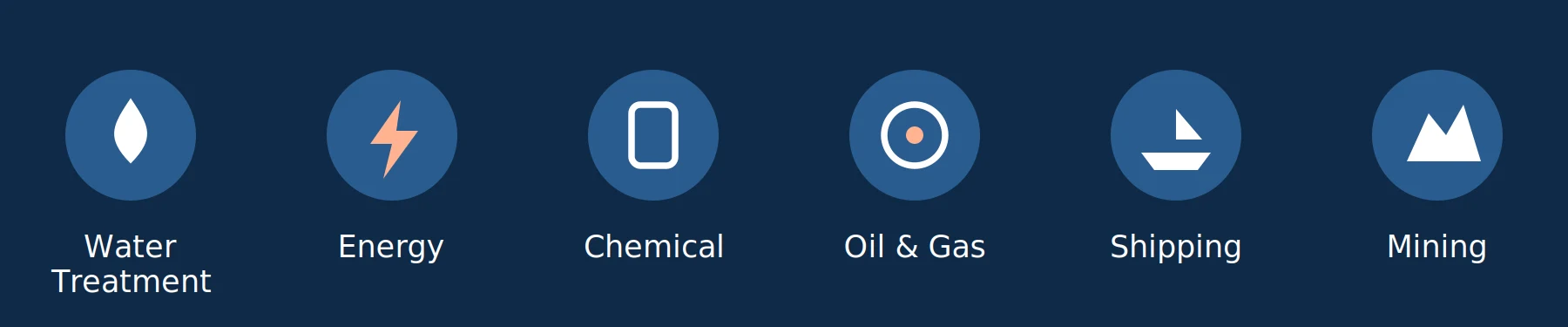
Mechanical seals are found in almost every system where fluid passes through or is mixed. Water treatment and water plants, refineries, thermal power plants, shipping and mining lead the list. They are also widely used in the food, chemical, pharmaceutical, textile and energy industries.
How to Choose the Right Mechanical Seal
A wrongly chosen seal does not just fail quickly; it can also damage other parts of the pump. When selecting, have the answers to these questions ready:
- What is the fluid? Is it acidic, abrasive, oily, or does it contain solid particles?
- What are the operating temperature and pressure?
- What are the shaft diameter and rotation speed?
- Are the face materials (carbon graphite, silicon carbide, tungsten carbide, ceramic) and elastomers (NBR, EPDM, FKM, PTFE) suitable for the fluid?
- Could the environment be explosive? If so, ATEX-compliant products are required.
When you are not sure, asking the technical team instead of guessing is usually the cheapest route.
Frequently Asked Questions
What is the difference between a mechanical seal and soft packing?
Soft packing is a braided material compressed around the shaft, and a small amount of dripping is normal. A mechanical seal works with precision faces, leaks far less and needs less maintenance.
When should a mechanical seal be replaced?
If you see constant leakage around the shaft, unusual noise, vibration or a rise in temperature, it is time to check. Service life varies with operating conditions.
Let’s choose the right seal for your application together.
For pricing and technical information, call +90 212 549 73 25 or write to support@rotaseal.com. You can browse our mechanical seal products and our e-brochure.
